
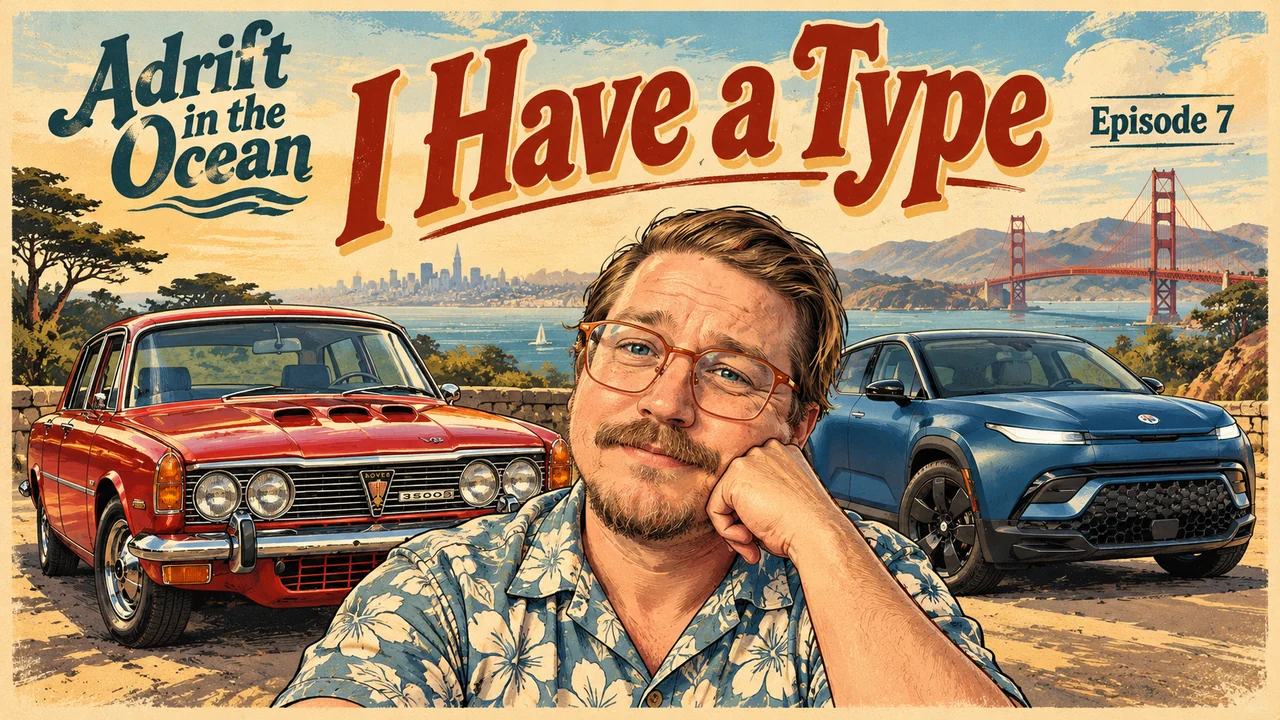
After a summer of mostly uneventful driving, the Fisker finally delivered what the internet had been promising all along: a real problem. The main infotainment computer, or ICC, began with intermittent black screens and gradually turned the central display and climate controls into a bootloop. At one point, the system seemed determined to live at 78 degrees forever. Unlike a reluctant turn-signal stalk, this was a repair I actually needed.
Finally, an actual failure
A1 Auto looked into it, but chose not to gamble with a repair path that risked making the situation worse, and didn't charge me for the unsuccessful visit. Ocean Repair Service came up from Southern California to work on the car in my garage. This was the sort of specialized help you need when the manufacturer is gone and the remaining knowledge is spread across shops and dedicated owners.
I spent a little over $1,000 putting things right. The upside: the ICC and TBox were finally functioning together, and the repair opened the way to updates from Ocean OS 2.2.3 through 2.5 and 2.6. The car had working screens again and a raft of software improvements. The route to getting here was absurd; the results were quite good.
New software, new little problems
With a modest Carlinkit CPC200-CCPA adapter, I gained wireless Android Auto on the factory screen. For a person who had been using a separate little Android Auto display, this felt substantially more like the car the hardware always promised to be. I also got updated driving features, including torque vectoring, and noticed refinements in the interface and other systems.
The newer PKC22 key setup was a mixed blessing. It added information and functionality but, for my habits, wasn't quite as convenient as the PKC21/Ocean Link Pro experience I had grown to like. Newer software is not automatically better in every respect.
So I bought its 1970 counterpart
Around the same time I acquired a 1970 Rover P6 3500S, a North American-spec British sedan with a Buick-derived V8, De Dion rear suspension, four-wheel disc brakes, and a determinedly unconventional approach to engineering. On paper it has practically nothing to do with the Ocean. In spirit, I think they're related.
Both are comfortable, unexpectedly quick, technically ambitious cars for people who could have bought something much more ordinary. Both require an owner willing to learn an eccentric support ecosystem. The Rover doesn't have an infotainment computer to reboot, which feels like a substantial point in its favor.
Apparently I have a type. The Fisker finally broke, got repaired, and came back noticeably better. Then I bought another complicated car. No lessons were learned.