
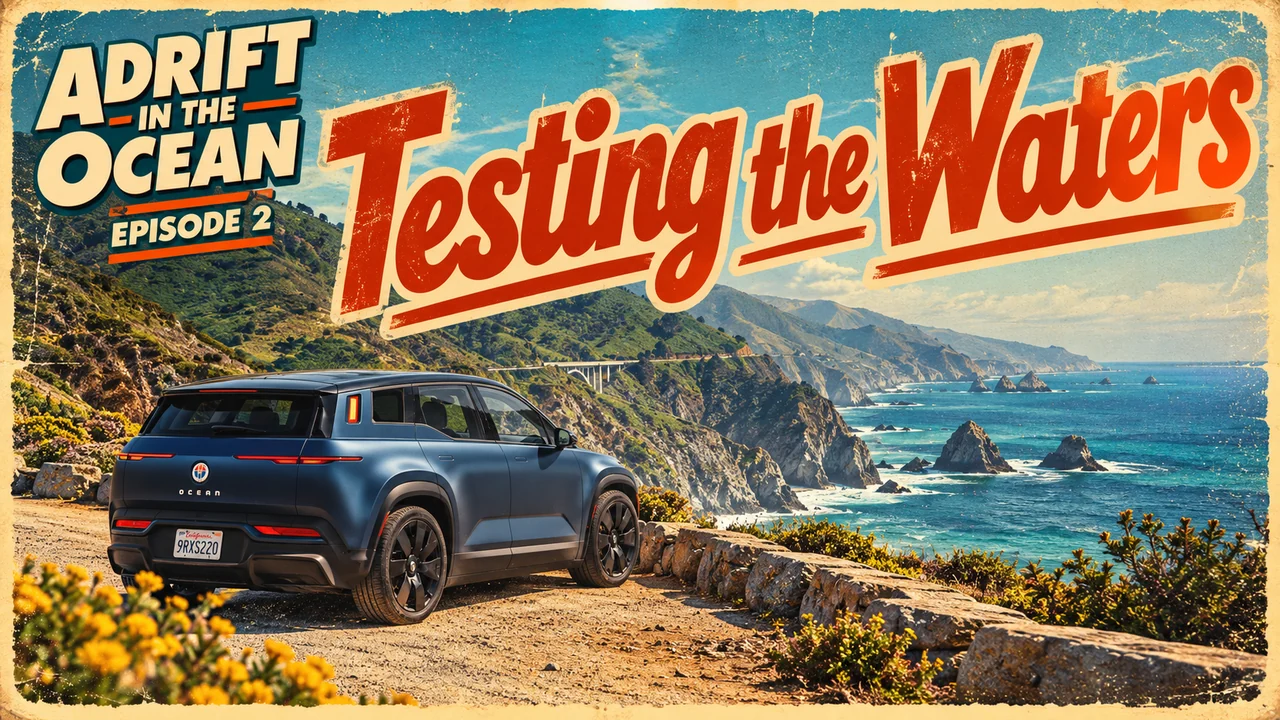
The Ocean's purchase price is the sort of number that makes you start writing elaborate justifications on scraps of paper. Episode two was my attempt to use something more defensible than scrap-paper mathematics. I wanted to compare what I was spending with the cars I actually own and drive, and to check whether the early internet complaints still matched the car sitting in my driveway.
What did it cost, really?
My purchase paperwork and early expense log put the effective vehicle price, after the rebate I was tracking, at roughly $15,983. Spread over a hypothetical five years that is about $266 a month before insurance, registration, repairs, subscriptions, charging infrastructure, or anything else. Those omissions are not small. At the time, the running total in my expense log was already $17,654.56. A low sticker price does not magically convert a discontinued EV into a cheap hobby.
But the comparison matters. If the Ocean is replacing miles that would otherwise go on a Mercedes, an old Dodge, or a diesel 4x4, electricity makes a real dent in the running costs. It is also more compelling to drive than most of the inexpensive EVs I tried during the search. That doesn't make it a recommendation for everybody. It makes it an interesting calculation for somebody with several backup vehicles and a high tolerance for complexity.
The 'final' official software
After an update to Ocean OS 2.2.3, the car was largely doing car things. The major strengths were the ride, performance, interior, and reassuring solidity. The annoyances were mostly small: occasional warnings, excessive noises, minor interface choices, and the kind of strange behavior that other modern cars get away with every day.
What fascinates me is the information surrounding all of this. Knowing which software is actually installed, which services still exist, who can update what, and which advice has expired feels like learning an unofficial second manual. The car is not just hardware; it is a growing network of independent owners, technicians, volunteers, and software projects.
The less dramatic conclusion
The internet offered a binary choice: disaster or miracle. My experience was neither. The Fisker was enjoyable, capable, and surprisingly ordinary to drive. The ownership ecosystem required more patience, research, and cash than the price tag suggested. I'm comfortable with that trade in my circumstances. I would not advise somebody shopping purely for low-cost transportation to make the same bet.