
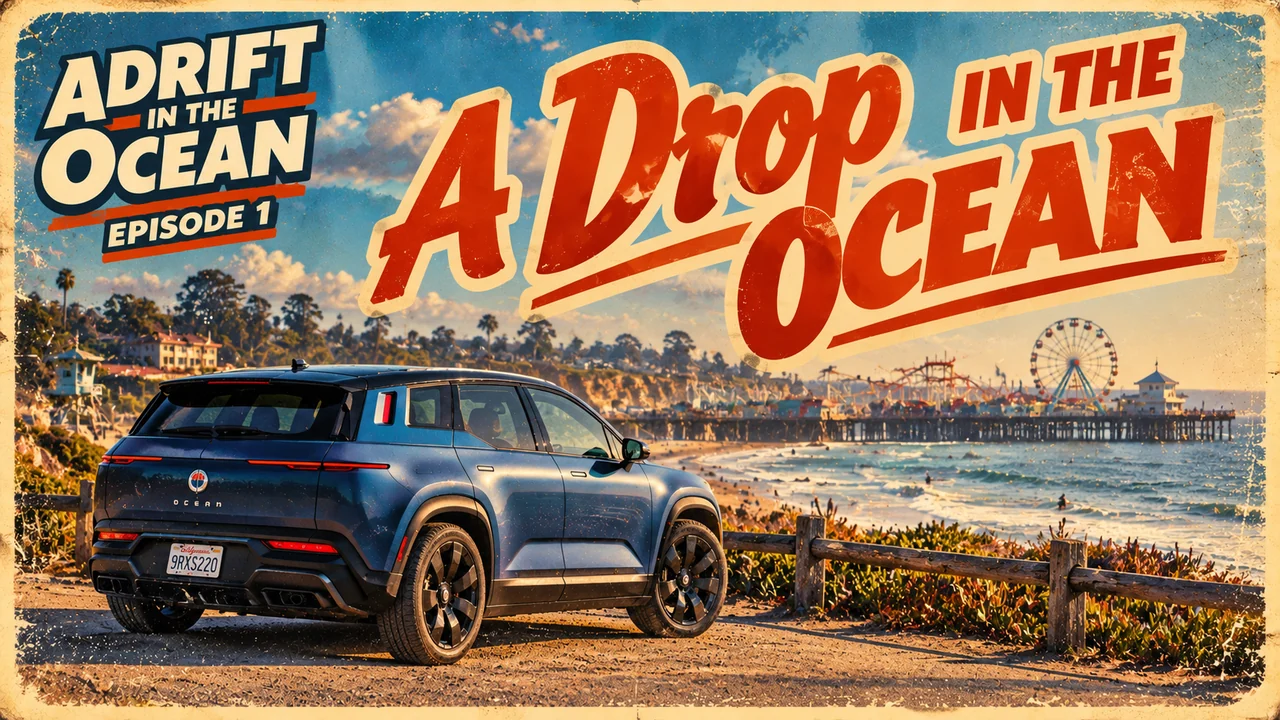
I bought a Fisker Ocean a week ago, in 2026, after its manufacturer had already collapsed. The reaction from friends and family was less "congratulations" and more "you did what?" I can see their point. But I wanted an interesting electric daily driver, not another anonymous appliance, and the Ocean's performance, range, and secondhand pricing made an unexpectedly persuasive argument.
Researching a car in the misinformation swamp
Trying to figure out what Fisker ownership actually looked like was harder than it should have been. Search results mixed genuinely bad experiences, old reviews from early software builds, present-day owner reports, and people repeating whichever answer had been typed most confidently. A question could produce two useful replies, four incorrect ones, and an entire choir cursing Henrik Fisker's name. I didn't want a campaign for or against the car; I wanted to know what I would actually be buying.
The coolant-pump recall was a perfect example. Online I found reimbursement horror stories. At the shop I discovered the applicable recall repair was covered. That is a pretty important fact to omit from the internet's collective testimony.
A Porsche dealership, briefly
The car I chose was at a Porsche dealer. Its previous owner had been a Fisker executive who traded it toward a Taycan, an ownership-history punchline that writes itself. The Ocean had curbed wheels, tired tires, no charger, and hadn't been detailed. I offered $15,500 as-is. They agreed, then sold it to somebody else while I was driving up.
I took that as a sign and returned my attention to the other cars. A week later the deal had fallen apart and the dealer called back. I asked for a better price for my trouble; they obliged. Better still, the wheels had been repaired, it wore new Yokohama Geolandars, and someone had detailed it. The second test drive promptly included a software crash. The drive home delivered more warnings. The actual driving, inconveniently for the narrative, was excellent.
The first 300 miles
In the first week I drove more than 300 miles, joined the Fisker Owners Association, signed up for Ocean Loop, and began untangling the car's cloud connectivity. A shop tried a reflash without success, so at that point my software updates would need to be done in person. It was annoying, not a reason to park the car.
My early efficiency was about 0.38 kWh per mile. Compared with putting premium gasoline in one of my other cars, the operating-cost difference was meaningful. Of course, this ignores the new subscriptions, accessories, and other expensive expressions of optimism.
The car itself was fast, quiet, comfortable, and far better than the internet noise suggested. The support structure was another matter entirely. That contrast is what this series is about. I am not trying to prove Fisker was secretly brilliant or secretly terrible. I just wanted a record of what happened.